Overview
A community‑based healthcare organization set out to expand access to mental health services by creating an anonymous, student‑friendly digital care platform. Their mission, rooted in promoting abundant living and reducing barriers to care, required a modern solution that could reach underserved populations while maintaining strict compliance and operational efficiency.
AppsChopper partnered with the organization to build a unified mental health application that integrates telehealth, home health support, and community‑based services into one secure ecosystem. The platform streamlines appointment scheduling, improves care coordination, and ensures HIPAA‑aligned documentation, all while preserving patient privacy.
A key outcome of this transformation is a scalable digital foundation that increases access to qualified providers, reduces administrative friction, and strengthens continuity of care across multiple locations. By centralizing services and enabling real‑time operational visibility, the organization is now equipped to deliver timely, equitable mental health support to the communities that need it most.
The Client
This healthcare organization was established with the mission of promoting abundant living and preventing out-of-home placement through accessible, community-centered care. In addition to delivering essential healthcare services, the organization supports underserved communities through its foundation by providing scholarships, educational resources, and empowerment initiatives for University and Community College students.
The organization is committed to ensuring healthcare access is treated as a fundamental human right, especially for individuals and families who have historically faced barriers to consistent mental health and wellness support.
The Challenge
As demand for mental health services increased, the organization faced several operational and scalability challenges that limited its ability to expand access while maintaining quality and compliance.
Key challenges included:
Limited access to qualified mental health providers in underserved regions.
Fragmented systems for scheduling, documentation, and care coordination.
Workforce shortages impacting provider availability and follow-up care.
Operational complexity across multiple locations and regulatory environments.
Strict HIPAA and data security requirements that increased administrative burden.
The need to preserve patient anonymity and privacy while delivering digital care.
The organization required a centralized, secure platform that could reduce friction for patients, improve provider workflows, and support long-term growth without compromising compliance or mission alignment.
Key Objectives
The primary goal was to modernize the organization’s care delivery model through a unified digital platform. Core objectives included:
Build a centralized mental healthcare application supporting telehealth and community-based services.
Improve access to care through mobile-first, patient-friendly experiences.
Streamline appointment scheduling and patient onboarding workflows.
Enable HIPAA-compliant documentation and secure patient record management.
Improve operational visibility and care coordination across locations.
Support scalability as patient demand and provider networks grow.
Our Approach
Strategy & Discovery
AppsChopper began with a discovery phase to understand the organization’s care model, regulatory requirements, and patient engagement challenges. This included mapping patient journeys, provider workflows, documentation processes, and compliance needs across telehealth and in-person services.
Building a Unified Mental Health Platform
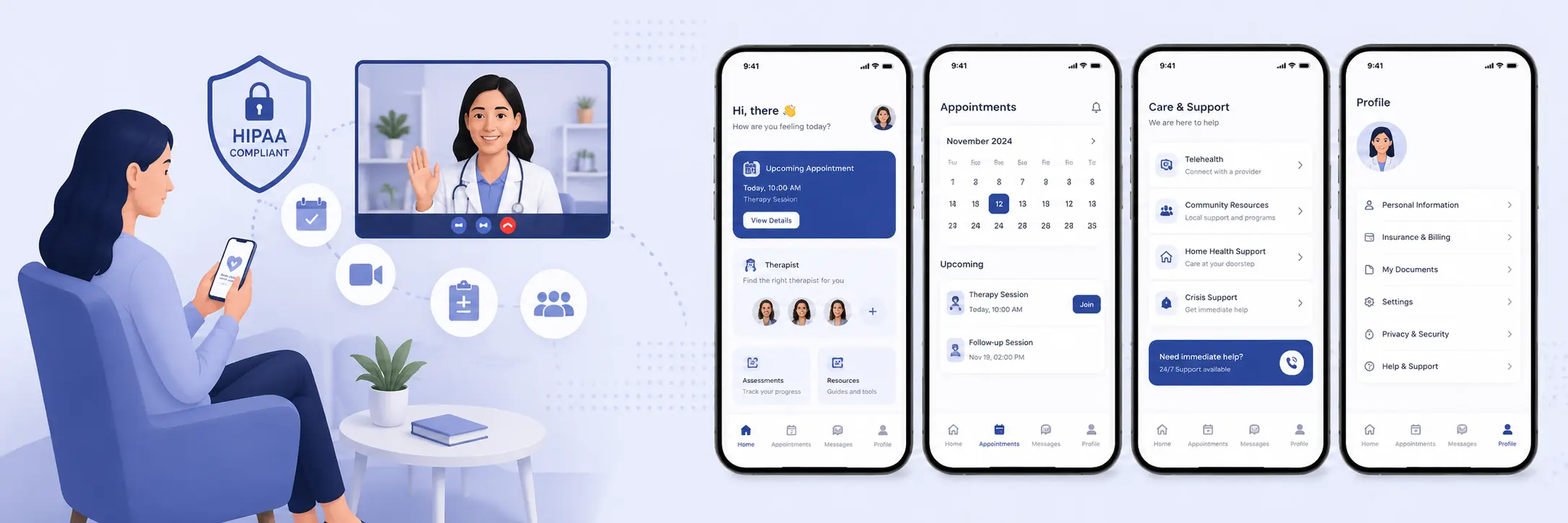
We designed and developed a secure, mobile-first mental healthcare application that unifies:
Telehealth services.
Appointment scheduling and care coordination.
Patient onboarding and assessments.
Provider documentation and record management.
Community-based referrals and home health support.
The platform was architected to ensure HIPAA compliance, data security, and role-based access control across all user types.
Telehealth Enablement & Care Coordination
Built-in telehealth functionality allows patients to schedule appointments, connect with providers remotely, and receive timely care regardless of physical location. Centralized scheduling tools reduced delays, improved provider availability management, and strengthened continuity of care.
Billing Transparency & Insurance Support
The application supports insurance verification and co-pay tracking, giving patients clarity into financial responsibilities while reducing administrative workload for internal teams.
Compliance, Security & Scalability
Given the sensitivity of mental health data, the platform was engineered with secure documentation, audit-ready workflows, and HIPAA-aligned infrastructure. The solution was optimized for scalability, enabling the organization to expand services without increasing operational complexity.
Solution Delivered
Mental Healthcare Mobile Application (App Store Enabled)Core Capabilities:
HIPAA-compliant patient record management.
Telehealth services with secure provider connections.
Centralized appointment scheduling and management.
Care coordination and provider access workflows.
Therapist matching and patient support tools.
Personalized patient assessments.
Insurance verification and co-pay tracking.
Community provider integration and referral support.
Provider API enablement.
Results & Outcomes
The unified digital platform enabled the organization to scale mental health services while maintaining its mission of accessibility, privacy, and community impact.
Key outcomes included:
Expanded access to mental health care through mobile-first telehealth delivery.
Reduced scheduling delays and improved provider utilization.
Improved continuity of care across multiple locations.
Increased operational efficiency through centralized workflows.
Enhanced patient trust through secure, privacy-focused design.
Stronger compliance posture with HIPAA-aligned documentation and audits.
Value Delivered
Enabled patients to connect with providers more easily through telehealth and coordinated care services.
Centralized scheduling, documentation, and care coordination reduced administrative friction.
Insurance verification and co-pay visibility improved patient understanding and internal workflows.
Delivered a platform capable of supporting long-term growth across underserved communities.
Protected sensitive mental health data through HIPAA-compliant platform engineering.
Conclusion
By delivering a unified mental healthcare application, AppsChopper empowered the organization to modernize its care delivery model while preserving its mission of equitable, community-centered mental health support. The platform reduced barriers to care, strengthened provider coordination, and established a secure, scalable foundation for delivering timely mental health services to the communities that need them most.