
Table of Contents
The market for mobile apps is proliferating, with no sign of stopping anytime soon. People use apps for everything from online shopping to booking movie tickets, playing games, and watching any show or movie. Since convenience is a driver for this massive change, the mobile app development is the choice businesses and decision-makers are leaning towards.
Mobile apps are an excellent platform for businesses (irrespective of the industry niche) as they offer better personalization. Keeping in mind that an average individual spends about 4 hours and 37 minutes daily on their phones, as per Exploding Topics.
With the increasing popularity of mobile apps, business owners are investing in a mobile app development company for a successful app. However, the main concern of entrepreneurs is the cost of creating an app.
This blog post provides a comprehensive guide on how much it costs to make an app, including the factors that influence the overall price.
Key Factors That Influence Mobile App Development Cost
The cost to build an app isn’t a single fixed number, and most businesses realize this early in the planning stage. The final budget usually takes shape through a series of technical and strategic decisions made before and during development. Understanding these factors helps set realistic expectations and prevents cost surprises later.
Looking at these key factors affecting mobile app development cost together makes it easier to balance cost, quality, and long-term business value before committing to a budget.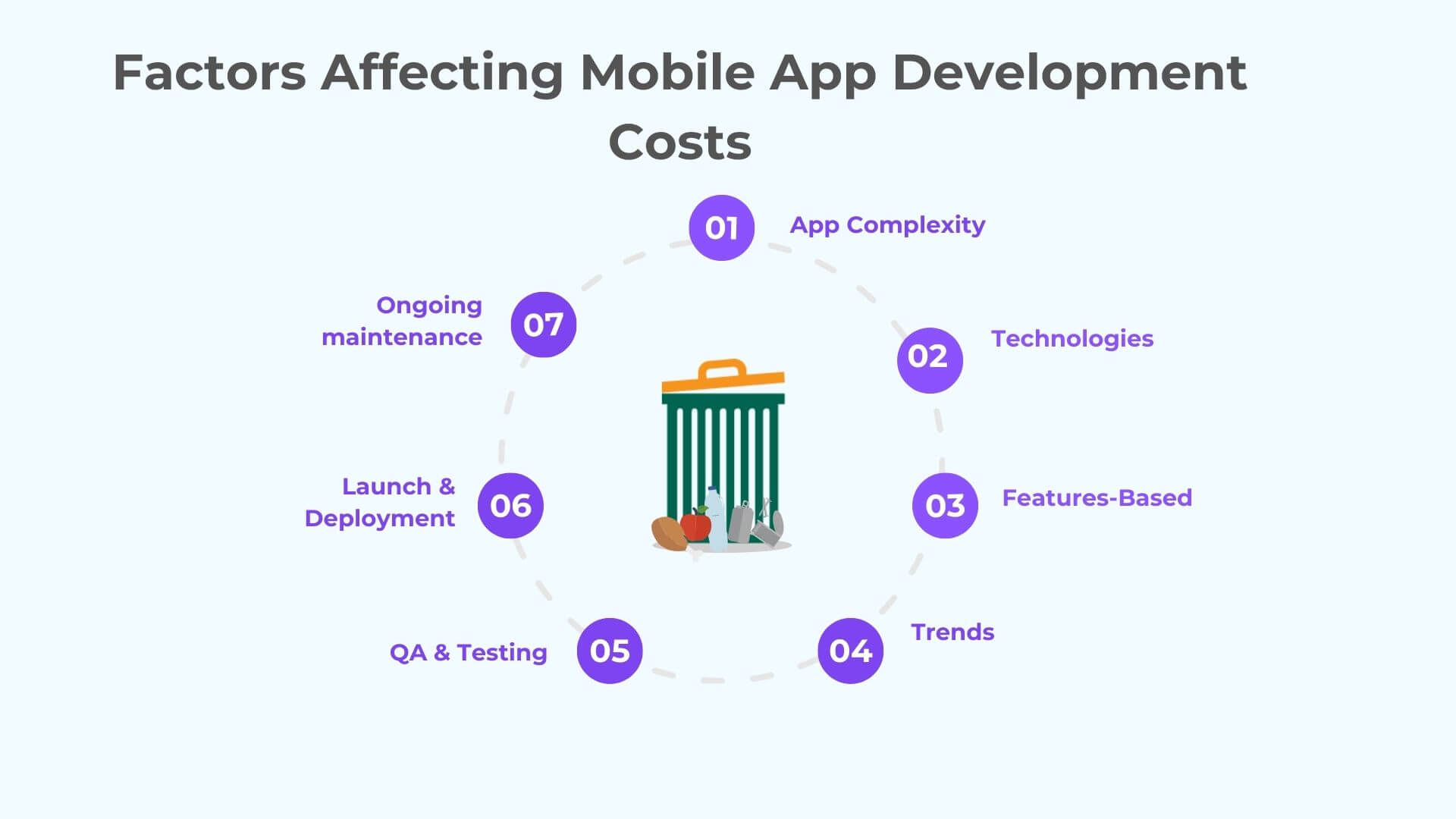
Mobile App Development Cost by App Complexity
The cost to develop an app varies significantly based on the complexity of the application, not just the number of screens or features. App complexity reflects how much logic, integration, scalability, and security the product requires. For businesses planning an app in 2026, understanding complexity levels early helps set realistic budgets, timelines, and technical expectations.
Simple apps focus on limited functionality and minimal backend logic, while moderately complex apps introduce real-time data handling, third-party integrations, and user accounts. Highly complex or enterprise-grade applications involve advanced architectures, high-performance backends, compliance requirements, and long-term scalability planning.
By categorizing an app by complexity, decision-makers can better estimate development effort, allocate resources wisely, and avoid application development cost overruns later in the project.
| App Complexity | Functional Scope | Estimated Cost (USD) | Timeline |
| Simple / MVP | Static content, basic flows | $30,000 – $80,000 | 2–3 months |
| Mid-Level | APIs, authentication, backend | $80,000 – $200,000 | 4–6 months |
| Advanced | Real-time data, AI, integrations | $200,000 – $400,000 | 6–9 months |
| Enterprise | High availability, compliance | $400,000+ | 9–12+ months |
Cost Based on Mobile App Development Technologies
The choice of development technology plays a major role in determining the average cost of app development. Different technologies vary in development effort, performance capabilities, maintenance requirements, and long-term scalability. Selecting the right approach depends on business goals, target platforms, and expected user growth.
| Mobile App Development Technologies | Approach | Mobile App Development Cost | Business Use Case |
| iOS | Native (Swift) | $40,000 – $150,000 | Premium user base |
| Android | Native (Kotlin) | $40,000 – $150,000 | Wider market reach |
| Cross-Platform | Flutter / React Native | $50,000 – $200,000 | Faster launch |
| Multi-Platform | Separate native builds | $120,000 – $350,000+ | Enterprise scale |
Features-Based Mobile App Development Cost Breakdown
The cost of developing a mobile app is heavily influenced by the features you choose to include, as each feature adds design effort, development time, testing complexity, and maintenance overhead. For businesses, understanding feature-level costs is critical to prioritizing functionality that delivers real value without inflating the budget unnecessarily.
Core features like user authentication or basic dashboards are relatively straightforward, while advanced capabilities such as real-time tracking, AI-driven personalization, or third-party integrations require deeper technical expertise and more development hours.
A features-based cost of apps breakdown helps decision-makers evaluate trade-offs, plan phased releases, and align product functionality with business goals and user expectations.
| Feature | Estimated Cost |
| User Authentication | $3,000 – $8,000 |
| Payment Integration | $5,000 – $15,000 |
| Push Notifications | $2,000 – $6,000 |
| GPS & Location Services | $6,000 – $20,000 |
| AI / ML Capabilities | $15,000 – $50,000 |
| Third-Party APIs | $3,000 – $12,000 |
Cost Based on Mobile App Development Trends
Emerging mobile app development trends directly influence project costs by introducing new technologies, tools, and implementation requirements. Features such as AI-driven personalization, wearable integrations, super apps, and enhanced security standards increase development effort while also improving scalability and user experience.
For businesses, understanding how these trends impact the cost of mobile apps helps in deciding which innovations are worth adopting now and which can be planned for later phases. A trend-based cost perspective ensures smarter investment decisions without compromising future readiness.
| Mobile App Development Trends | Typical App Development Charges |
| AI & Machine Learning | $15,000 – $50,000+ |
| AR/VR / Immersive Experiences | $20,000 – $80,000+ |
| Wearable & IoT Integration | $10,000 – $40,000 |
| Chatbots | $8,000 – $30,000 |
| Real-Time Features | $10,000 – $35,000 |
| Cloud-Native Architecture | $12,000 – $45,000 |
| Mobile Commerce & Wallets | $7,000 – $25,000 |
| Progressive Web Apps (PWAs) | $20,000 – $60,000 |
| 5G Optimization | $5,000 – $25,000 |
| Security & Compliance Enhancements | $6,000 – $20,000 |
| Blockchain | $15,000 – $60,000 |
QA & Testing Costs
Quality assurance and testing are essential to ensuring a mobile app performs reliably across devices, operating systems, and real-world user conditions. These costs account for functional testing, performance validation, security checks, and compatibility testing.
While often underestimated, investing in thorough QA reduces the risk of post-launch failures, negative reviews, and costly fixes, making it a critical component of the overall development budget.
| QA Activity | Cost for App Development |
| Manual Testing | $4,000 – $12,000 |
| Automated Testing | $6,000 – $18,000 |
| Security Testing | $3,000 – $10,000 |
| Performance Testing | $2,000 – $6,000 |
App Store Launch & Deployment Costs
App store launch and deployment costs cover the final steps required to make a mobile application live and accessible to users. This includes app store compliance checks, build configuration, server setup, and production monitoring.
Proper deployment ensures a smooth launch, faster approvals, and stable performance from day one, helping businesses avoid delays and post-release issues.
| Launch Type | Cost of Mobile App Development |
| Apple App Store Fee | $99/year |
| Google Play Fee | $25 (one-time) |
| App Store Optimization | $2,000 – $8,000 |
Maintenance & Ongoing Costs
Maintenance and ongoing costs represent the long-term investment required to keep a mobile app secure, functional, and competitive. These expenses include bug fixes, performance optimization, OS updates, security patches, and feature enhancements.
Planning for ongoing maintenance from the outset helps businesses protect their initial investment and ensure a consistent user experience over time.
| Annual Maintenance | Annual Cost |
| Bug Fixes & OS Updates | 10–15% of dev cost |
| Feature Enhancements | 5–10% |
| Hosting & Monitoring | $2,000 – $10,000 |
Hidden Mobile Application Development Costs Businesses Must Budget For
Beyond visible development expenses, mobile app projects often involve hidden costs that can significantly impact the total budget if not planned in advance. These may include third-party service fees, compliance requirements, post-launch optimizations, infrastructure scaling, and unexpected design or feature adjustments. Understanding these less obvious costs early helps businesses create more accurate budgets, avoid financial surprises, and maintain project momentum throughout the app’s lifecycle.
| Cost Area | Estimated Impact |
| Compliance & Legal | $3,000 – $10,000 |
| Localization | $2,000 – $8,000 |
| Security Audits | $4,000 – $15,000 |
| Marketing & User Acquisition | $5,000 – $50,000+ |
How Much Does the Mobile App Development Process Cost Based on Each Phase?
A well-defined mobile app development process helps businesses reduce risk, control costs, and build scalable products that perform reliably in real-world conditions. Rather than treating development as a single phase, successful teams follow a structured lifecycle that balances technical rigor, user needs, and long-term maintainability.
Requirement Analysis and Business Alignment
The process begins with understanding business objectives, target users, and technical constraints. This phase includes stakeholder discussions, market research, and feasibility analysis. Clearly documented requirements help avoid scope creep and ensure that development decisions align with measurable business outcomes.
Estimated Cost: $2,000 – $8,000
Technical Architecture and Planning
Once requirements are finalized, teams design the application architecture. This involves selecting the technology stack, defining data flows, planning APIs, and deciding on cloud infrastructure. Sound architectural planning ensures scalability, performance, and security as the app grows.
Estimated Cost: $3,000 – $12,000
UI/UX Design and Prototyping
Design focuses on creating intuitive user flows and visually consistent interfaces. Wireframes and interactive prototypes are tested early to validate usability and reduce rework during development. Strong UX design improves adoption and long-term engagement.
Mobile App Development Cost Estimate: $5,000 – $20,000
Frontend and Backend Development
Development is typically split into frontend and backend workstreams. The latest Frontend development technologies handle user interfaces and interactions, while backend development manages business logic, databases, and integrations. Agile methodologies are commonly used to deliver features in iterative cycles.
Mobile App Development Cost Estimation: $30,000 – $200,000+
Integration and Quality Assurance
During this phase, third-party services, APIs, and external systems are integrated. Comprehensive testing, covering functionality, performance, security, and compatibility, ensures the app works reliably across devices and operating systems.
Estimated Cost: $8,000 – $30,000
Deployment and App Store Launch
After successful testing, the app is prepared for deployment. This includes configuring servers, setting up monitoring, and completing app store submission requirements. Proper launch planning reduces approval delays and post-release issues.
Estimated Cost: $1,500 – $6,000
Monitoring, Maintenance, and Continuous Improvement
Post-launch, teams monitor performance, user feedback, and analytics. Regular updates, bug fixes, and feature enhancements keep the app secure, relevant, and aligned with evolving user expectations.
Estimated Cost: 15–25% of the total development cost annually
Mobile App Development Tips That Can Save Money for Your Business
Building a mobile app can be a significant investment, but smart planning and informed decisions can help businesses reduce costs without compromising quality. By prioritizing the right features, choosing the appropriate technology stack, and avoiding common development pitfalls, organizations can optimize their app development budget. This section highlights practical tips that help businesses save money while building scalable, high-performing mobile applications.
Start With a Clearly Defined MVP Scope
Focus on building only the features required to validate your idea. A well-scoped MVP development reduces time limits and rework, and allows you to test market demand before investing in advanced functionality.
Prioritize Features Based on Business Impact
Not all features deliver equal value. Ranking features by revenue potential, user adoption, and operational efficiency helps prevent unnecessary development and keeps app development pricing under control.
Choose the Right Platform Strategy Early
Decide early whether native or cross-platform development fits your business goals. Changing platform strategy mid-development often leads to duplicated effort and increased costs.
Invest in UX Planning Before Development
Wireframes, user flows, and clickable prototypes help identify usability issues early. Fixing UX problems during planning is significantly cheaper than post-development changes.
Use Scalable and Proven Technology Stacks
Rely on mature frameworks, libraries, and cloud services. Proven stacks reduce development risk, speed up implementation, and lower long-term maintenance costs.
Minimize Custom Development Where Possible
Leverage third-party APIs, SDKs, and ready-made solutions for features like authentication, payments, and analytics instead of building everything from scratch.
Build With Modular and Reusable Architecture
A modular backend and clean code structure allow features to be added or modified without disrupting the entire system, reducing future development expenses.
Plan for Security and Compliance From Day One
Adding security or compliance measures later is expensive. Early implementation avoids rework, audit failures, and costly fixes.
Automate Testing and Deployment Processes
Automated testing and CI/CD pipelines reduce manual effort, shorten release cycles, and prevent expensive bugs from reaching production.
Budget for Maintenance and Iterative Improvements
Treat app development as an ongoing process. Regular updates and incremental improvements are more cost-effective than large, infrequent rebuilds.
How Much Does App Development Cost?
Mobile app development costs include both initial build expenses and ongoing operational investments. Initial costs cover requirement analysis, design, development, testing, and deployment, typically ranging from $25,000 for simple apps to $250,000+ for complex, enterprise-level solutions, depending on features, platforms, and technology choices.
Post-launch, businesses should plan for recurring costs such as maintenance, infrastructure, security updates, and feature enhancements. These usually account for 15–25% of the initial development cost per year. Additional hidden expenses, like cloud scaling, third-party services, and compliance updates, can further impact long-term budgets.
Viewing mobile app development outsourcing as a continuous investment rather than a one-time cost helps businesses plan realistically, control expenses, and support sustainable growth over time.
Why Choose AppsChopper as Your Trusted Mobile App Development Firm?
AppsChopper is a trusted mobile app development firm with extensive experience delivering scalable, secure, and high-performance applications across industries. Our team combines strong technical expertise with a business-first approach, ensuring every app is built to meet real user needs and long-term growth goals.
From strategy and UI/UX design to development, testing, and post-launch support, we offer end-to-end mobile app development services backed by proven processes. With a focus on quality, transparency, and timely delivery, AppsChopper helps businesses turn ideas into reliable mobile solutions that create measurable value.
Frequently Asked Questions
- How Long Does It Take to Build an App?
Simple apps take 2–4 months, moderately complex apps 4–7 months, and enterprise-level apps 8–12+ months. Clear planning and an MVP approach can speed up delivery. - How Much Does It Cost to Maintain an App?
Maintenance usually costs 15–25% of the initial development cost per year, covering bug fixes, updates, security, and minor feature improvements. - How Much Does Backend Infrastructure Cost?
Backend costs depend on scale: $50–$300/month for MVPs, $300–$2,000/month for growing apps, and $2,000–$10,000+/month for large-scale enterprise solutions.