Table of Contents
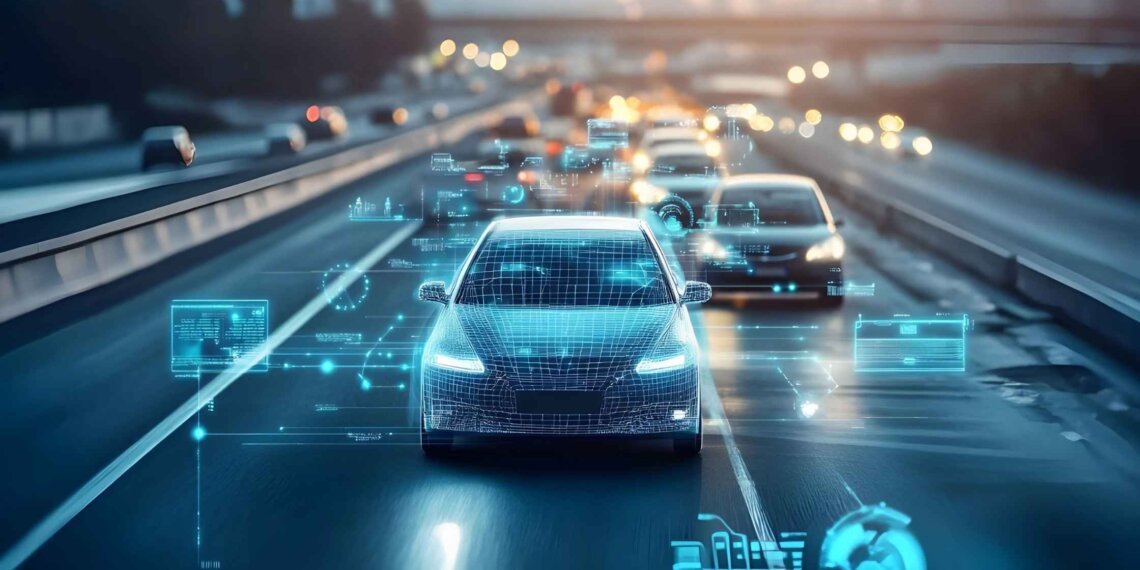
The Internet of Things (IoT) is a network of physical devices, sensors, and other technologies that collect, analyze, and derive actionable insights over the internet. In the automotive industry, these devices include processors, motors, and sensors that communicate with each other.
According to Statista, there are approximately 22 billion active IoT connections installed worldwide. Over time, IoT and automotive industry have come to work together in harmony. Moreover, the applications are endless and transformative. These include connected cars, smart fleets, and vehicle-to-everything systems that enhance safety and efficiency while delivering a polished driving experience.
In this blog, you will learn about the benefits of IoT in automotive market, common use cases and applications, and how to build an automotive IoT application.
IoT Applications in Automotive Industry for Businesses
Although IoT technologies and integrations can be customized to meet a wide variety of automotive needs, integrating IoT in automotive industry offers many benefits that can help car developers and manufacturers build smart cars.
1. Connected Vehicle Systems
Real-time vehicle diagnostics, remote locking and unlocking, and vehicle health monitoring via mobile apps.
2. Telematics and Fleet Management
GPS tracking, driver behavior analysis, compliance monitoring, and route optimization.
3. In-Car Infotainment and Personalization
Smart infotainment systems that adapt content, navigation, and climate controls based on driver preferences.
4. Over-the-Air (OTA) Software Updates
Remote firmware and software updates without having to go to a dealership.
5. Vehicle-to-Everything (V2X) Communication
Vehicles communicate with traffic signals, road infrastructure, and other vehicles to prevent accidents.
What are the Benefits of IoT in Automotive Industry?
IoT in vehicles has transformed the automotive industry. The integration of IoT can deliver a wide range of benefits to drivers. Below is a table listing the benefits of IoT integration in automobiles, along with a description and example of how each improves the driver experience.
Benefit | Description | Example |
| Enhanced vehicle safety | IoT sensors can detect hazards, enable automatic emergency responses, and monitor driver behavior | Lane departure warnings, optimized real-time airbag deployment, lane safety warnings |
| Better customer experience | Many IoT technologies allow for personalized services, remote diagnostics, and infotainment | Cars that sync with apps, provide remote software updates, or suggest nearby charging stations |
| Fleet and logistics optimization | The internet of things in automotive industry allows for tracking of vehicle location, performance, and usage, allowing efficient route planning and asset management | IoT-enabled fleet systems track fuel usage, vehicle location, and driver behavior in real time. This allows companies to optimize routes, reduce fuel costs, and prevent vehicle downtime |
| Improved Fuel Efficiency and Cost Savings | IoT for cars optimizes routes and tracks driving patterns and fuel consumption | Smart fleet management that reduces fuel usage and maintenance costs |
| Predictive Maintenance and Reduced Downtime | Connected sensors monitor tire pressure, engine health, and battery status | Alerts for low battery or engine anomalies sent directly to the driver or fleet manager |
Real-World IoT Use Cases in Automotive Industry
As the applications and benefits of IoT in the automotive industry have expanded, so have the innovations in car manufacturing that leverage IoT. Decades ago, self-driving cars were considered out of reach. Fast forward to today, and not only do we have autopilot and self-driving cars, but also other integrated technologies that make operating a vehicle easier for users.
1. Waymo Self-Driving Cars
Waymo uses a multitude of sophisticated automotive IoT solutions to power its self-driving cars. It is one of the most cutting-edge IoT innovations in the automotive industry. There are 4 main steps for operating the car: perception, localization, planning, and control. Waymo’s IoT sensors are customized for an optimal perception system. They use a combination of cameras, LiDARs, and RADARs.
LiDAR stands for light detection and ranging, and RADAR stands for radio detection and ranging. Both are sensor technologies that can detect objects and measure distances. More specifically, the system is programmed with classifications for different types of cars, objects, and obstacles the car might encounter. Also, Waymo self-driving cars can distinguish whether an object is moving.
2. Tesla’s Autopilot System
Tesla is an example of IoT in electric vehicles. Their autopilot system uses advanced driver-assistance features. More specifically, Tesla has created and implemented a computer vision system called Tesla Vision. It uses a combination of technologies, including ultrasonic sensors and AI vision processing, to enable semi-autonomous driving. When working in tandem, these sensors and processors provide a multitude of benefits for drivers.
The first benefit is lane assistance. Tesla’s automotive IoT integration ensures the car stays in the middle of its lane, improving driver safety. Tesla’s steering wheel also makes automatic steering corrections to make steering and turning more efficient. When on autopilot, Tesla’s system can also detect and respond to stop signs and traffic lights.
3. BMW IoT-Based Solutions
BMW partners with multiple tech companies, including Qualcomm, AWS, Microsoft Azure, and other IoT development platforms to build its technology and manufacturing processes. BMW has created Connected Cars and linked them to the BMW Cloud.
BMW leverages IoT-connected vehicle insights through the My BMW App and ConnectedDrive. These services let users remotely maintain their vehicles and schedule vehicle servicing.
4. Toyota Mobility Service Platform
Toyota’s mobility service platform (MSPF) aims to make driving more accessible and to provide functions for mobility services. It runs in the cloud, and the data gathered by the vehicle is managed by a cloud service developed by Toyota.
By applying IoT analytics for automotive, MSPF transforms vehicle data into insights that improve vehicle performance and enhance overall mobility.
Tips for Building Secure Automotive IoT Applications
When building an application, it is important to understand and implement automotive IoT security. There are multiple risks associated with integrating technology into automobiles, most notably the risk of hacking. If IoT is cloud-based, a hacker can breach the cloud and illegally track the car’s location, unlock doors, or access sensitive driver data.
Connected vehicles rely on constant communication among the car, cloud servers, mobile apps, and backend systems. Multiple connection points increase the system’s vulnerability. Without proper security controls, attackers can exploit weak authentication, outdated firmware, unsecured APIs, or poorly configured networks.
To ensure high-quality security in applications for IoT in the automotive industry, developers and businesses should prioritize protection at all stages of development. The key practices to follow are:
1. End-to-end encryption
All data transmitted between the vehicle, cloud, and mobile app should be encrypted. This way, data will remain unreadable to unauthorized parties.
2. Regular firmware and software updates
Outdated software makes it easier for hackers to find entry points. Over-the-air (OTA) update technologies ensure that security patches can be deployed quickly across all connected vehicles.
3. Network segmentation
It is important to isolate important vehicle systems from less secure components. For example, entertainment systems should be separated from engine controls to limit the damage caused by a breach.
4. Strong authentication and access controls
Multi-factor authentication and role-based permissions should be implemented to limit who can access vehicle systems and sensitive data
5. Continuous monitoring and threat detection
Real-time monitoring allows businesses to detect unusual activity or potential attacks early. Implementing automated alerts and response systems can stop threats before they escalate.
Overall, prioritizing security, anticipation, and proper planning can help ensure the security of automotive IoT. Strong security measures help reduce losses, build customer trust, and increase revenue.
How IoT App Development Companies Can Help?
Every automotive company has different IoT needs. The features of IoT that will be integrated and the type of app that will be developed are determined by the goals, whether that’s improving in-car experiences, tracking fleets of vehicles in real time, or streamlining maintenance schedules. Hiring a trusted IoT app development company makes all the difference.
Development partners start by understanding the business they are working with. In the consultation phase, they will identify which problems need to be solved, which data needs to be collected, and how the app will communicate to vehicles and devices. Lastly, they move into the design and development phase. Here, they build a solution that is customized and tailored to the business’s specific ecosystem. Beyond building the app, companies that develop internet of things for cars also can help ensure that applications are backed by the best security by conducting mobile app testing.
Conclusion
Overall, it is important to partner with a trusted app development company that is well-versed in automotive IoT integration. They can help develop efficient and cutting-edge automotive IoT apps. The automotive industry greatly benefits from these innovations, which serve as differentiators, enhance user experience, and increase revenue for businesses.
The user experience for drivers has greatly benefited from IoT connectivity in automotive industry. The advantages extend beyond convenience and include safety, efficiency, and long-term customer loyalty. Now is the best time to invest in smart, connected solutions that will keep your business competitive and your customers satisfied. Whether you’re exploring IoT possibilities or ready to build, the right development partner will turn your vision into reality.
FAQ
1. When will 5G impact IoT in automotive industry?
5G is already reshaping IoT in the automotive industry, with its biggest impact expected between 2025 and 2030 as networks expand and connected vehicles gain faster, more reliable communication.
2. Which IoT technologies are used in autonomous vehicles?
Autonomous vehicles use LiDAR sensors, radar, GPS, cameras, and Vehicle-to-Everything communication. These technologies feed data into AI systems that are processed through edge computing and cloud platforms for real-time decision-making.
3. What is the difference between connected and autonomous vehicles?
Connected vehicles use IoT to communicate with external systems, while autonomous vehicles operate using AI and sensors. Most autonomous vehicles rely on IoT connectivity to operate safely.
4. How does IoT improve fleet management for automotive businesses?
IoT provides fleet managers with real-time visibility into vehicle location, fuel consumption, engine health, and driver behavior via connected sensors, reducing costs, improving safety, and minimizing breakdowns.
5. What industries outside of automotivebenefit from IoT?
Healthcare uses IoT for remote patient monitoring, manufacturing uses smart sensors to prevent equipment failures, and retail uses IoT to manage inventory and personalize customer experiences. IoT applications are versatile across industries.
6. Howdo over-the-air (OTA) updates work in connected vehicles?
OTA updates deliver software improvements, bug fixes, and security patches wirelessly to vehicles, eliminating dealership visits, saving time, and enabling manufacturers to continuously improve products after purchase.